The Yellow Wallpaper: A Descent into Insanity By way of Phrases
Associated Articles: The Yellow Wallpaper: A Descent into Insanity By way of Phrases
Introduction
With nice pleasure, we are going to discover the intriguing subject associated to The Yellow Wallpaper: A Descent into Insanity By way of Phrases. Let’s weave fascinating info and provide recent views to the readers.
Desk of Content material
The Yellow Wallpaper: A Descent into Insanity By way of Phrases

Charlotte Perkins Gilman’s "The Yellow Wallpaper" stands as a chilling testomony to the harmful nature of patriarchal medical practices within the late nineteenth century. Greater than only a story of a girl’s confinement, it is a visceral exploration of psychological sickness, societal expectations, and the suffocating energy of silence. By way of the narrator’s more and more fragmented journal entries, Gilman crafts a story that speaks volumes by means of rigorously chosen phrases, revealing the insidious creep of insanity because it consumes her. Analyzing key quotes from the story illuminates the gradual unraveling of the narrator’s sanity and the profound affect of her oppressive surroundings.
The story’s energy lies not in grand pronouncements of insanity, however within the delicate, creeping deterioration mirrored within the narrator’s language. The yellow wallpaper itself turns into a strong image, a canvas onto which her anxieties and burgeoning psychosis are projected. The narrator’s obsession with the wallpaper is a mirrored image of her personal confinement, each bodily and psychological. Her preliminary descriptions are comparatively goal, nearly medical: "It is a charming place, however the paper… it’s so dreadfully miserable." This seemingly innocuous commentary already hints at a disconnect, a delicate unease that foreshadows the deeper psychological turmoil to return.
As her psychological state deteriorates, her descriptions develop into extra subjective and charged with emotion. The wallpaper, initially merely "miserable," transforms into one thing sinister and alive. The shift in her notion is palpable in her evolving descriptions: "I lie right here on this nice immovable mattress – it’s nailed down, I imagine – and observe that sample about by the hour. It’s pretty much as good as gymnastics, I guarantee you." This quote reveals a vital aspect of her descent: the substitution of wholesome exercise with obsessive, repetitive habits. The wallpaper turns into a focus, a determined try to impose order on a chaotic inner world. The "gymnastics" remark, whereas seemingly innocent, betrays a rising detachment from actuality and a determined want for self-soothing rituals.
The narrator’s evolving relationship with the wallpaper mirrors her more and more fractured sense of self. She begins to see patterns and figures throughout the design, deciphering them as symbols of her personal imprisonment and the stifling expectations positioned upon her. "There are issues in that paper that no one is aware of however me, or ever will." This quote underscores the isolation she experiences, each bodily in her room and emotionally inside her marriage. Her secret information of the wallpaper’s hidden meanings represents her inner battle, a battle she can not share along with her husband, John, who dismisses her considerations as mere "nervousness."
John’s dismissive perspective is a recurring theme, and his phrases, or fairly his lack of know-how, contribute considerably to the narrator’s decline. His condescending remedy reinforces her feeling of powerlessness and exacerbates her psychological misery. The narrator’s frustration is obvious in her passive-aggressive feedback about his "relaxation treatment," a remedy that sarcastically serves to worsen her situation. The irony is palpable, highlighting the inadequacy of the medical strategy of the time. The "relaxation treatment," meant to revive her well being, as an alternative isolates and silences her, fueling her descent into insanity.
The narrator’s language progressively deteriorates, reflecting her crumbling psychological state. Her sentences develop into longer, extra convoluted, mirroring the more and more advanced and chaotic nature of her ideas. Using repetition and fragmented sentences underscores her psychological fragmentation. For instance, her obsession with the girl she sees behind the wallpaper is expressed by means of more and more frantic and repetitive descriptions: "I’ve received out finally," says she, "and I’m completely free." This quote, seemingly a triumphant declaration, is definitely a chilling manifestation of her delusion. The repetition of "completely free" highlights the fragility of her newfound "freedom," a freedom that exists solely throughout the confines of her psychosis.
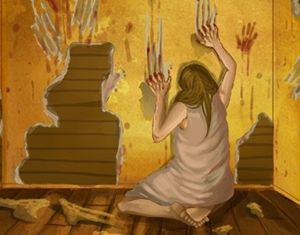
The blurring of actuality and fantasy is a central theme, and the narrator’s language displays this blurring. She begins to determine with the girl behind the wallpaper, seeing her as a fellow prisoner, a kindred spirit trapped in the same state of affairs. This identification represents a whole breakdown of her sense of self, a merging of her personal actuality with the imagined actuality of the wallpaper. The road between observer and noticed turns into more and more blurred, culminating within the remaining, chilling scene the place she tears down the wallpaper, releasing the girl, and in the end, herself, albeit in a state of full psychological collapse.
Using symbolism all through the story additional enhances the affect of the quotes. The yellow wallpaper itself is a potent image of oppression and confinement. Its suffocating presence mirrors the narrator’s personal emotions of being trapped in her marriage, her position as a spouse, and the restrictive societal expectations positioned upon ladies of her time. The creeping vines and the unusual patterns develop into metaphors for the insidious nature of her psychological sickness, slowly however certainly consuming her.
The narrator’s descriptions of her environment aren’t merely descriptive; they’re emotionally charged, reflecting her inner state. The room itself turns into a personality, an emblem of her confinement and isolation. The barred home windows, the heavy furnishings, and the general oppressive ambiance all contribute to the sense of claustrophobia and despair. The seemingly innocuous particulars, such because the "nailed down" mattress, tackle a sinister significance within the context of the narrator’s deteriorating psychological state.
The story’s energy lies in its subtlety. The descent into insanity just isn’t a sudden, dramatic occasion, however a gradual, insidious course of, meticulously documented by means of the narrator’s evolving language. The quotes chosen all through the narrative function milestones, marking the phases of her psychological decline. The shift from goal commentary to subjective interpretation, the rising use of repetition and fragmented sentences, and the blurring of actuality and fantasy all contribute to the story’s chilling impact.
Moreover, the story’s ending, whereas seemingly a launch, can be profoundly disturbing. The narrator’s triumphant declaration of freedom is chilling in its context, revealing a whole detachment from actuality. Her actions, whereas seemingly liberating, signify a whole psychological breakdown. The ultimate picture of the narrator crawling over her husband, leaving him to confront the results of his neglect and the failure of the "relaxation treatment," is a strong indictment of the patriarchal medical practices of the time.
In conclusion, "The Yellow Wallpaper" is a masterpiece of psychological horror, achieved not by means of sensationalism, however by means of the cautious and deliberate use of language. The quotes examined all through this essay function essential markers within the narrator’s descent into insanity, reflecting the insidious nature of her sickness and the suffocating societal pressures that contributed to her breakdown. The story stays related at present, serving as a cautionary story in regards to the significance of psychological well being consciousness, the risks of silencing marginalized voices, and the necessity for compassionate and efficient remedy for psychological sickness. The facility of Gilman’s prose lies in its capacity to convey the delicate nuances of psychological deterioration, making the reader a witness to the narrator’s tragic journey, a journey documented within the chillingly evocative language of her personal phrases.





Closure
Thus, we hope this text has offered beneficial insights into The Yellow Wallpaper: A Descent into Insanity By way of Phrases. We hope you discover this text informative and helpful. See you in our subsequent article!