The Yellow Wallpaper: A Feminist Scream By way of the Ages
Associated Articles: The Yellow Wallpaper: A Feminist Scream By way of the Ages
Introduction
On this auspicious event, we’re delighted to delve into the intriguing matter associated to The Yellow Wallpaper: A Feminist Scream By way of the Ages. Let’s weave attention-grabbing data and provide recent views to the readers.
Desk of Content material
The Yellow Wallpaper: A Feminist Scream By way of the Ages
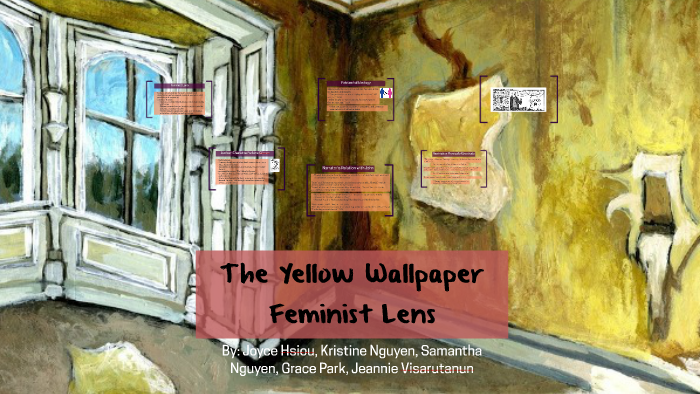
Charlotte Perkins Gilman’s chilling novella, "The Yellow Wallpaper," revealed in 1892, transcends its time to resonate powerfully with modern feminist discourse. Greater than only a gothic story of confinement and insanity, it is a potent indictment of the patriarchal buildings that constrained ladies’s mental and artistic freedom within the late Nineteenth century. Whereas the story itself does not explicitly articulate feminist beliefs utilizing fashionable terminology, its narrative and the protagonist’s inside monologue are brimming with implicit critiques that proceed to gasoline feminist interpretations. By analyzing key quotes throughout the textual content, we are able to dissect the novella’s lasting affect on feminist thought and its relevance to ongoing conversations about gender inequality.
The story’s energy lies in its delicate but pervasive portrayal of the narrator’s descent into insanity, a descent straight linked to the oppressive "relaxation remedy" prescribed by her doctor husband, John. This remedy, removed from restorative, turns into a instrument of patriarchal management, silencing her mental pursuits and reinforcing her dependence. The wallpaper itself, with its unsettling patterns and ambiguous imagery, turns into a metaphor for the narrator’s trapped thoughts and the suffocating societal constraints she faces.
Some of the revealing quotes underscores the narrator’s rising frustration together with her prescribed inactivity: "I get positively offended with John typically. He scolds me a lot once I get irritable." This seemingly easy sentence reveals a elementary energy imbalance. The narrator’s irritability, a pure response to her confinement and mental suppression, is framed as a flaw requiring correction, not a symptom of a deeply unjust state of affairs. John, the patriarchal authority determine, dismisses her emotional responses, reinforcing the societal expectation that ladies must be docile and compliant. This quote highlights the silencing of feminine voices, a central theme in feminist idea, the place ladies’s experiences and feelings are sometimes invalidated or dismissed by male-dominated methods.
Additional emphasizing this energy dynamic is the quote: "John laughs at me, after all, however one expects that in marriage." This assertion reveals a chilling acceptance of patriarchal dominance throughout the confines of marriage. The narrator anticipates and accepts John’s ridicule, highlighting the normalization of male condescension and the societal stress on ladies to endure such remedy. This normalization of patriarchal oppression is a key ingredient of feminist critique, exposing the insidious methods wherein energy imbalances are maintained via societal expectations and ingrained gender roles. The "one expects that" implies a deeply ingrained societal understanding of the spouse’s subservient function and the husband’s proper to exert management.
The narrator’s more and more determined makes an attempt to say her individuality are evident within the quote: "I’ve received a stunning room although, with home windows that look all methods, and air and sunshine galore. It’s on the highest ground, and I can see the backyard, and the street, and the woods past." This seemingly optimistic description is laced with irony. Whereas the room presents a bodily sense of freedom, the narrator’s confinement throughout the "relaxation remedy" renders her freedom illusory. She is bodily free to watch the world, but intellectually and emotionally trapped by her husband’s management. This distinction between bodily house and psychological imprisonment mirrors the expertise of many ladies, who could have bodily autonomy however are nonetheless constrained by societal expectations and patriarchal buildings. This quote speaks to the complexities of feminist struggles, the place even obvious freedoms can masks deeper types of oppression.
Because the narrator’s psychological state deteriorates, her identification with the wallpaper deepens, culminating within the potent assertion: "I’ve received out eventually," mentioned I, "and I’m free!" This seemingly triumphant declaration is deeply unsettling. Her freedom is achieved via an entire psychological breakdown, highlighting the harmful penalties of patriarchal oppression. The narrator’s escape is just not a liberation throughout the confines of societal norms however a determined flight from a actuality that has rendered her incapable of functioning inside it. This quote serves as a strong metaphor for the intense measures ladies may take to flee oppressive methods, suggesting that the very buildings designed to "defend" ladies can finally result in their destruction.
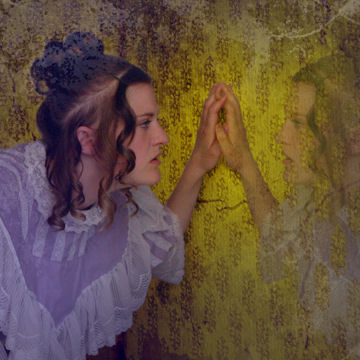
Using the wallpaper itself as an emblem is essential to understanding the novella’s feminist implications. The narrator’s obsessive give attention to the wallpaper’s patterns and her eventual identification with the lady she perceives trapped inside it turns into a illustration of the constraints positioned upon ladies’s creativity and self-expression. The creeping vines and shadowed figures throughout the wallpaper could be interpreted as symbolic representations of the pervasive nature of patriarchal management, slowly suffocating the narrator’s spirit. This visible metaphor permits Gilman to convey the insidious and infrequently invisible nature of gender oppression, highlighting how societal norms can subtly but successfully restrict ladies’s potential.
Moreover, the narrator’s more and more erratic conduct and her eventual embrace of insanity could be seen as a strong act of rise up. Her descent into what society would deem "insanity" could be interpreted as a rejection of the societal norms that demand her silence and submission. By rejecting the prescribed function of the docile spouse, she implicitly challenges the patriarchal system that has outlined her existence. This radical act, although self-destructive, highlights the desperation of ladies going through a system that provides no different avenue for resistance. The narrative thus means that the very act of defying societal expectations could be considered as a type of feminist resistance, even when that resistance results in societal rejection.
The quote, "I do not wish to write a narrative. I wish to write a e-book," although not explicitly current within the novella, displays the narrator’s suppressed ambition and want for mental freedom. This resonates deeply with feminist considerations about ladies’s entry to training and alternatives for inventive expression. The restricted alternatives out there to ladies within the Nineteenth century are mirrored within the narrator’s restricted entry to mental pursuits, highlighting the systemic limitations that prevented ladies from reaching their full potential.
In conclusion, "The Yellow Wallpaper" is just not merely a narrative about insanity; it is a highly effective feminist allegory that continues to resonate with readers in the present day. By way of using fastidiously chosen quotes and potent imagery, Gilman exposes the insidious nature of patriarchal oppression and the devastating penalties of silencing ladies’s voices. The narrator’s descent into insanity turns into an emblem of the intense measures ladies may take to withstand a system that denies them company and self-expression. The story’s enduring energy lies in its capacity to translate the delicate but pervasive types of gender inequality right into a compelling narrative that continues to gasoline necessary conversations about feminism, psychological well being, and the enduring struggle for gender equality. The novella’s legacy serves as a stark reminder of the historic and ongoing struggles confronted by ladies and the significance of difficult patriarchal buildings that restrict their potential and autonomy. The quotes, analyzed throughout the context of the story’s broader themes, reveal a strong critique of Nineteenth-century gender roles and supply a timeless commentary on the enduring wrestle for feminine liberation.

![�� [50+] The Yellow Wallpapers Feminist Quotes WallpaperSafari](https://cdn.wallpapersafari.com/97/65/0cmvAi.jpg)
![�� [50+] The Yellow Wallpapers Feminist Approach WallpaperSafari](https://cdn.wallpapersafari.com/63/90/46ijgH.jpg)
![�� [50+] The Yellow Wallpapers and Feminism WallpaperSafari](https://cdn.wallpapersafari.com/23/54/gRuoLO.jpg)
Closure
Thus, we hope this text has supplied precious insights into The Yellow Wallpaper: A Feminist Scream By way of the Ages. We hope you discover this text informative and helpful. See you in our subsequent article!